Hi folks! As is my wont occasionally, I do a post updating on all the things I’ve been up to over that past few months. You’ll notice usually it’s because I’ve done a talk or publication or some interesting research. And, often, it can stray far from the arcades … although there isn’t anything not related to them in my view!

This one’s a blockbuster!

The Story of Melbourne’s Lanes

Unboxing the book!

First up the biggest of big news. In February 2024 when I did one of these updates, I talked about the Melbourne laneways book I’d been working on with fellow authors, Richard Broome, Andy J May and Helen Stitt. Well, we launched the other week!

This book is an update of Weston Bate’s 1994 classic Essential but Unplanned. We’ve swapped the title and subtitle around for 2024, making it The Story of Melbourne’s Lanes: Essential but Unplanned.

After my exciting unboxing event at home a few weeks ago, we launched the book at RHSV (Royal Historical Society of Victoria) on Thursday, 3 October. It was a very, very well-attended launch, with some wonderful speeches and we were thrilled to have some of Weston Bate’s family there to celebrate with us.
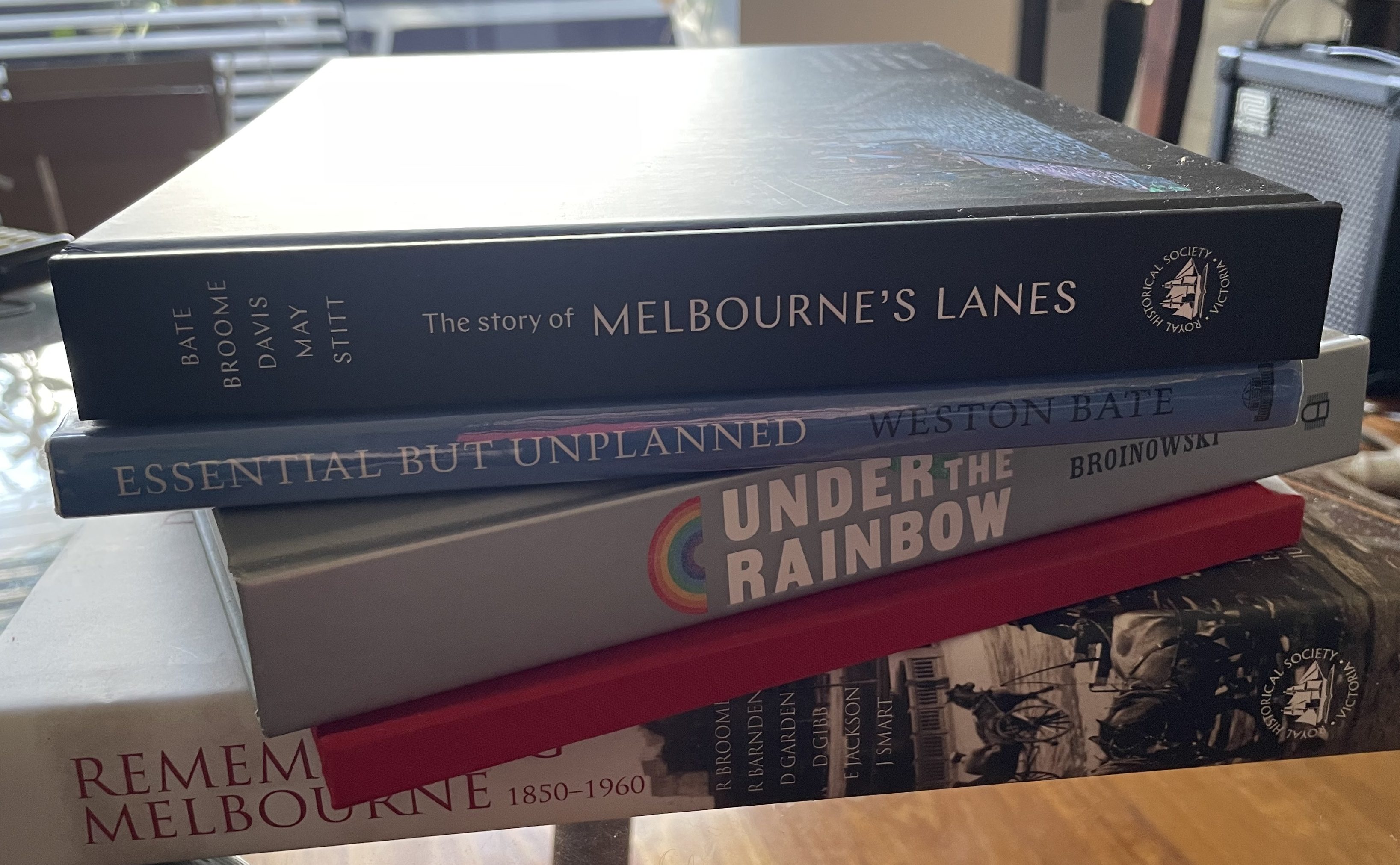
Original and updated version added to the ever-growing pile of Melbourne coffee table books!

The book is the brainchild of our fearless leader and driving force, Richard Broome, along with Weston Bate’s wife, Janice. The first half of the book features Bate’s original text and layouts with some minor updates.

Helen did a mammoth and stellar job of sourcing high-res versions of all the images in the original book, for which no original publication files existed.

The second half comprises two new chapters by Andy May, assisted by me, discussing the last thirty-year evolution of the lanes. This is complemented by around 200 brand new all-colour images provided by the Hawthorn U3A Camera Club (and a few by moi), including several ‘then and now’ spreads.

We’ve also updated the fascinating indexes from the original book. One explores the origins of almost 290 lane names. The second is a list of just over 500 lanes we could identify and their presence at certain dates (sometimes a lane has been through more than one name change, which we also tried to track!)

EQ Arcade. One of the newest arcades in Melbourne, 2024. © Nicole Davis

Bate’s original book not only explored those passages we think of as lanes, but also included Melbourne’s arcades and covered passages. This meant that quite a bit of research for my thesis informed the indexes.

But my thesis only covered the nineteenth century, so I had to add to this research and update the book with those built over the 123 years since 1901.

I had done some preliminary work on this for the thesis but not a deep dive, so it was a big task, looking at countless maps, directories and other sources, and walking the city checking for new arcades.

While the book research showed that many lanes and arcades have been built over or demolished, many new ones have also sprung up in their place, particularly in newer developments that draw inspiration from the city’s much-loved lanes and arcades.

The Melbourne Walk was still in the process of building while I was finalising the proofs, but it was included nonetheless!

We’ve also been doing media for the book, which my fellow author Andy May has been collating on the Melbourne History Workshop website.

This includes me, together with Richard and Helen, on 3AW’s Sunday night series, Remember When, with Philip Brady and Simon Owens, which you can listen to on the player below.

Don’t forget too that the festive season is coming. If you celebrate, this will made a fabulous present! You can buy online through RHSV and in selected bookstores. I hope you love reading it as much as we did creating it!

Bury St Edmunds, England & Oakleigh, Melbourne: Connecting Streets

Another couple of projects came my way this year via the Melbourne History Workshop. The first was a small piece of work on the seemingly strange instance of Oakleigh in southeast Melbourne sharing street names with the city of Bury St Edmunds in Suffolk, England.

Andy May was contacted by a journalist, Ross Waldron, from the Suffolk News about it and it ended up with me, as I was in the depth of street name and Titles Office research for the lanes book.

MMBW detail plan of Oakleigh, 1927, showing Westgate, Hatter, Eastgate and School Hall streets, which share names with streets in Bury St Edmunds, Suffolk. Abbeygate Street, south of Eastgate, is also a Bury street. State Library Victoria

It turned out that someone I knew was involved. Henry de Carle, a goldrush-era immigrant to Melbourne, had speculated in land in the area that was to become Oakleigh, naming the streets in his proposed development after those in his home town of …

Bury St Edmunds

To show that all is related to the arcades, I had previously done a little research on his brother Edward, who immigrated with his wife, Elizabeth, and brother, Henry, in 1850. Both brothers were merchants, and land speculators (sometimes in business together). One of Edward’s enterprises was …
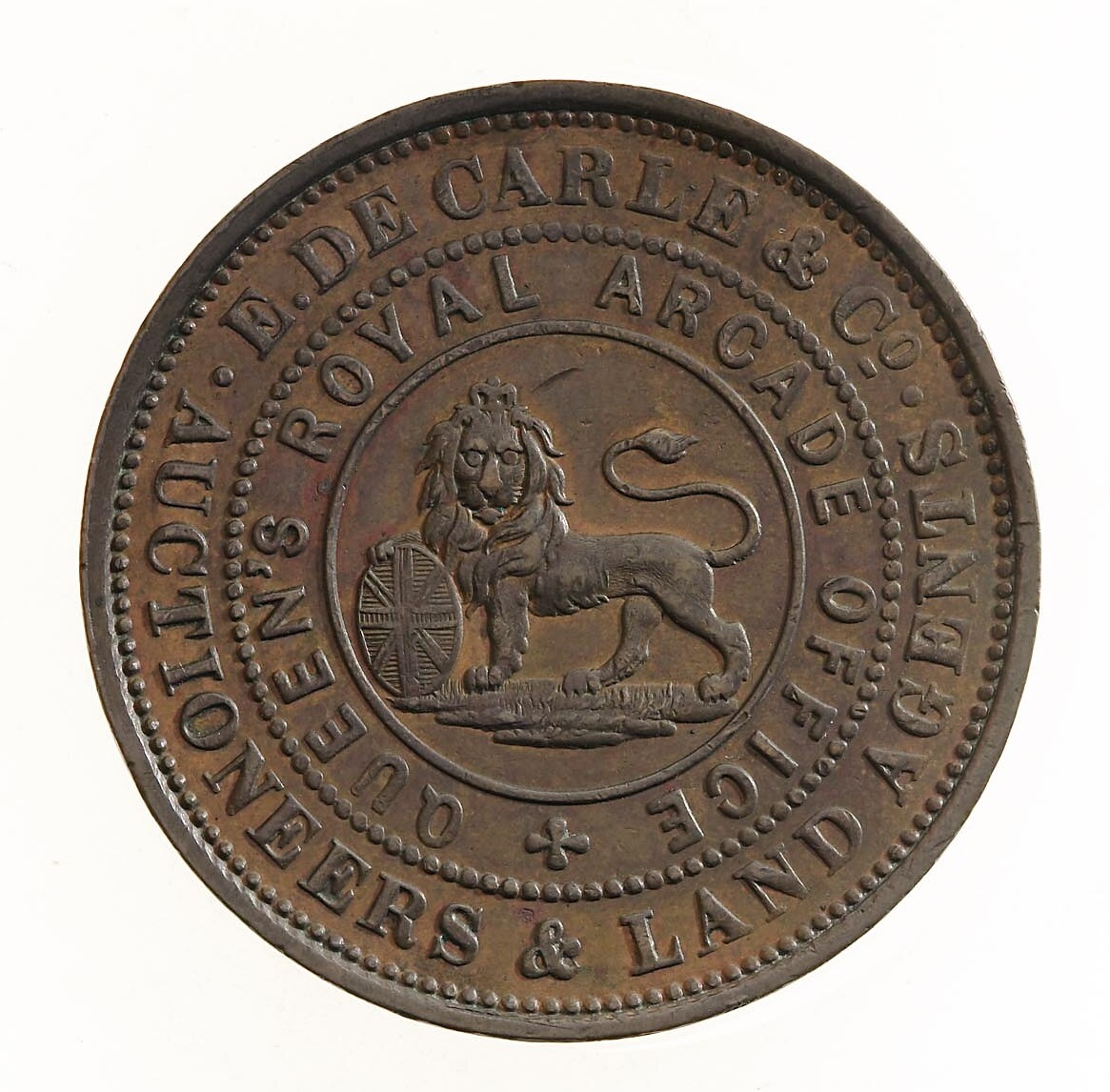
Edward de Carle & Co, Auctioneers & Land Agents, token, 1855, for the business Edward opened in the Queens Arcade. Museums Victoria, NU 3677

… The Queens Arcade

about which I’ve written before, twice. In this case, Edward got together with a syndicate to finance and open the building and had his own business there.

I’m currently writing a podcast episode and I’ll do a more formal blog post or article on this topic at some point. In the meantime, you can read about this interesting story in Ross’s Suffolk News article.

Musical Melbourne: The Making of a Music City

The second activity was a mapping project on the history of Melbourne as a music city, based on the work of Dr Henry Reese, a colleague for many years.

Deriving from his PhD research and continuing interests in sound history, Henry developed a large database tracking music sellers in Melbourne from the mid-nineteenth century to the 1930s.

I supplemented this with some data on music venues in the city in specific time-periods. (I was actually working on my last blog post on the Victoria Arcade and Theatre Royal when I came onboard!)
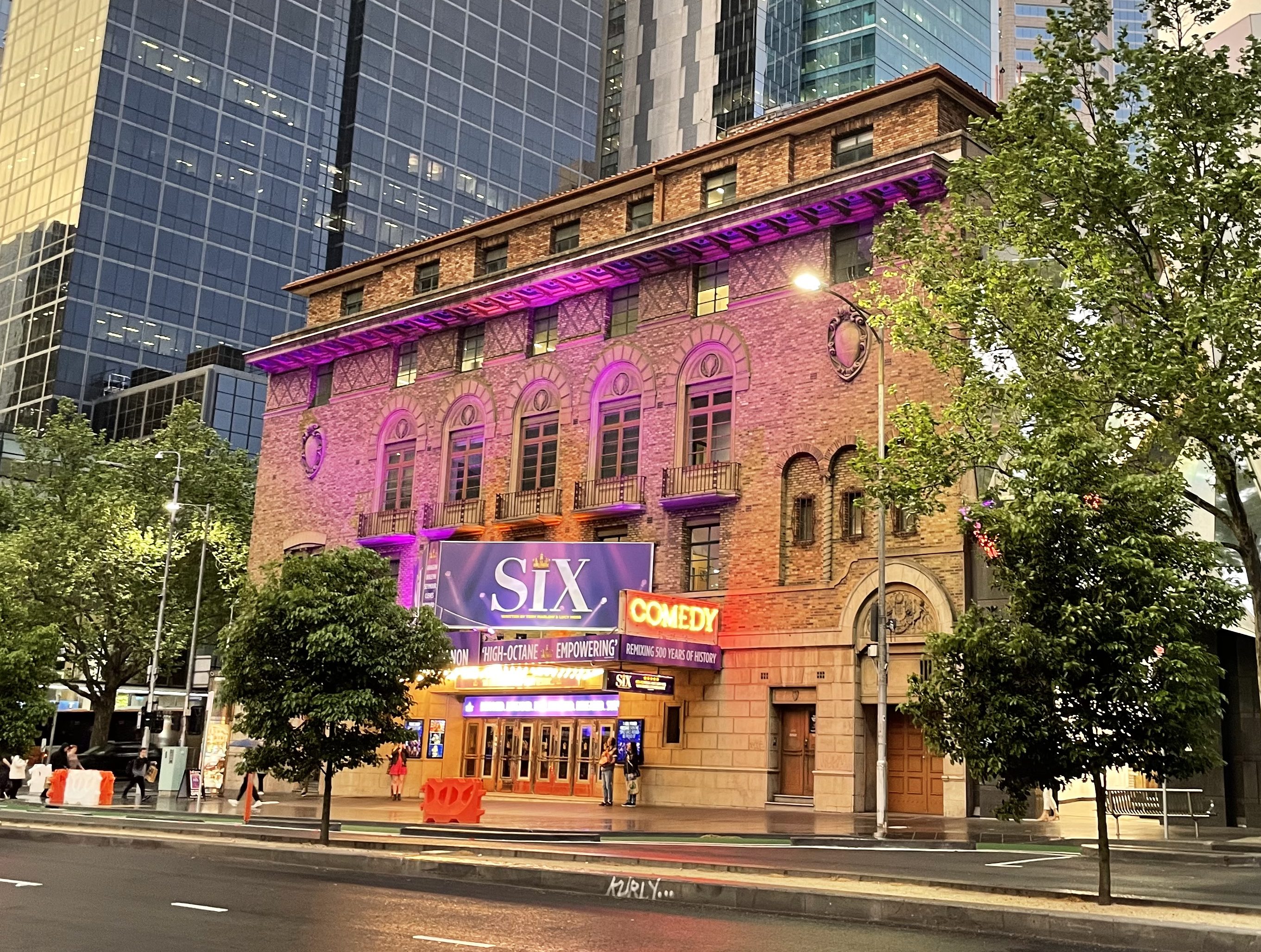
Comedy Theatre, Melbourne, built in 1928 on what was the site in the 1850s of Olympic Theatre. Photograph © Nicole Davis, 2024

With Mitchell’s technical expertise (wizardry), we then layered this data over maps of Melbourne from these periods, using the PROV (Public Record Office Victoria) mapping platform, Mapwarper. The platform has thousands of preloaded digitised maps from PROV but you can also add your own.

Funded by PROV, the project resulted in the maps and a video presentation, which we’ve uploaded to YouTube. We are doing more work on this project at the moment, adding further data to the database and likely will come out with an updated video in the future.

You can read more about this project on the Melbourne History Workshop website. (If you’re accessing the map itself, it can work better on a small screen to reduce the size of the screen a bit.)

Other Publications

My other recent publications are a little less related to arcades but they definitely inform work I’m doing at the moment on those buildings. These all come out of my last few years working in the digital archiving space.
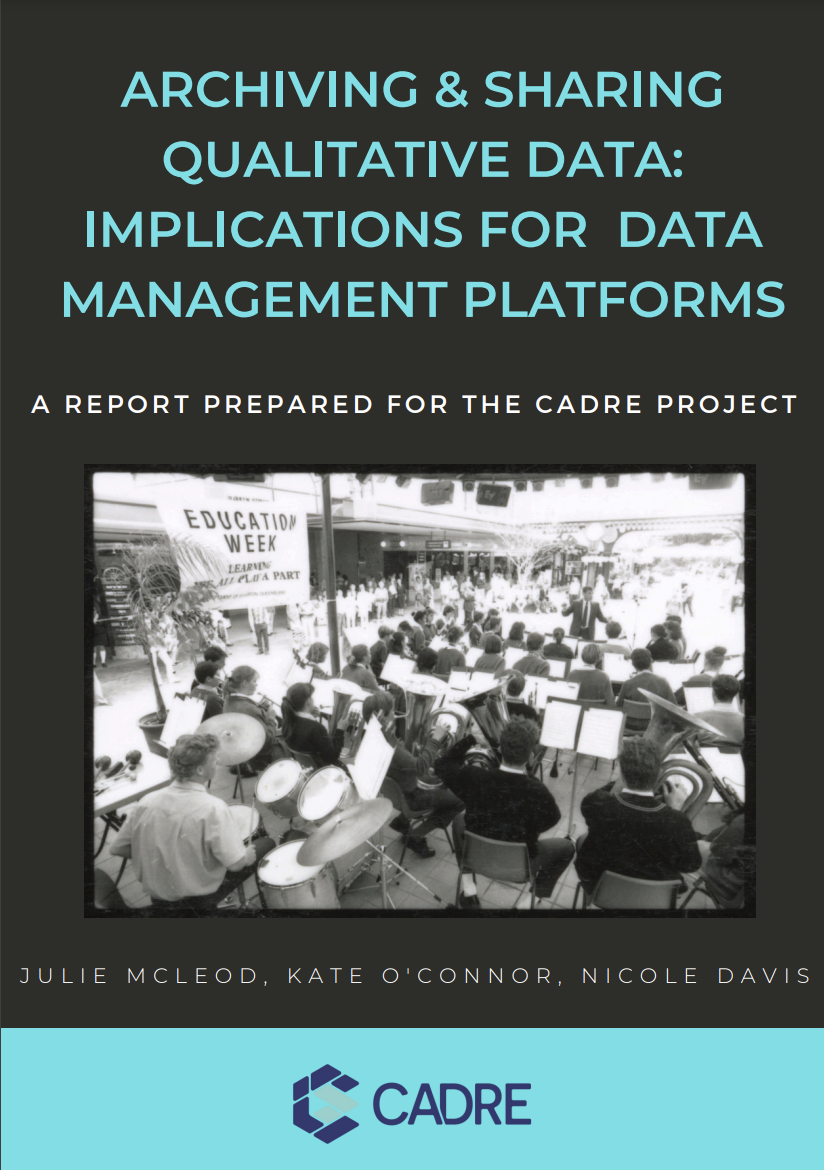
These include two reports for the major project we worked on over the past few years: CADRE (Coordinated Access for Data and Research Environments), building a platform to make research data more accessible.

Our role was to assess the work for its relevance to and possibilities for qualitative research data, leading on from work we’d done previously on archiving, sharing and reusing this type of data, including its ethical dimensions.

Co-authored with Julie McLeod and Kate O’Connor, Archiving and Sharing Qualitative Data: Implications for Data Management Platforms and Governance of Qualitative Data Sharing in Australia can be found on the Australian Policy Observatory website.

Also deriving from this work, Julie, Kate and I also published ‘The Ethics of Archiving and Sharing Qualitative Data’, a chapter in the new Routledge Handbook of Human Research Ethics and Integrity in Australia.

It was such a pleasure to be asked to contribute to this volume, and feels like it was, the culmination of ten years working in the field of Education history and sociology.

This was something I really just fell into but has provided a totally different dimension to my academic work and continues to inform my work as a historian and museum and heritage professional.

They also mark the end of an era for me working on various projects in the field over the past decade, including histories of progressive education; placemaking and education; qualitative data archiving, sharing and reuse; oral histories of education; and the ethics in qualitative data research.

Although I still have some writing to work on in that field, I wonderfully have started a full-time role as a historian in the heritage and museum sector; work that is really the coming together of all my history, heritage, and museum career experience over the past couple of decades.

And Back to Arcades

Currently I’m also writing on arcades (of course): a couple of journal articles and several public talks in 2025. This includes one for the Old Treasury Building’s Material Histories online seminar series on the theme The Fashion Cycle: from Retail to Reuse.

I’ll be presenting on the arcades as sites of modernity and commodity consumption, while my friend and colleague Laura Jocic with be talking about the lifecycles and reuse of garments.

And, most importantly, a book that comes out of my thesis research on Australia’s Nineteenth-Century Arcades is underway!

Earrings, Mounted Cameos, in their original box, Thomas Gaunt, Royal Arcade, Melbourne, c1870. Photographer: Rodney Start. Museums Victoria, HT62147, c1870. Collection created by Trevor Hancock and Mark Dale.

I still have a bunch of three-quarter drafted posts, which are actually about the history of arcades, but thought today I’d give an update on research life lately.

I’ve been working hard with my fellow authors, Richard Broome, Andrew J May and Helen Stitt on a thirtieth anniversary edition of Weston Bate’s Essential but Unplanned: The Story of Melbourne’s Lanes, which will be released later this year by Royal Historical Society of Victoria and State Library Victoria. Bate also included the city’s arcades, many of which join up with the lanes, an essential part of the way we move through and experience the city.

For me, this has involved two seemingly diametric activities. Often it has consisted of sitting at a desk staring at directories, maps, and spreadsheets to work on tracking the histories of the lanes. But it also means extensive walking around Melbourne’s CBD to see if certain lanes actually still exist in our rapidly changing cityscape or determining some other aspect of their location past or present. On those days, my 10,000 steps are easy to achieve!

Working away at Royal Historical Society of Victoria on Melbourne laneway histories with very old and very modern sources!
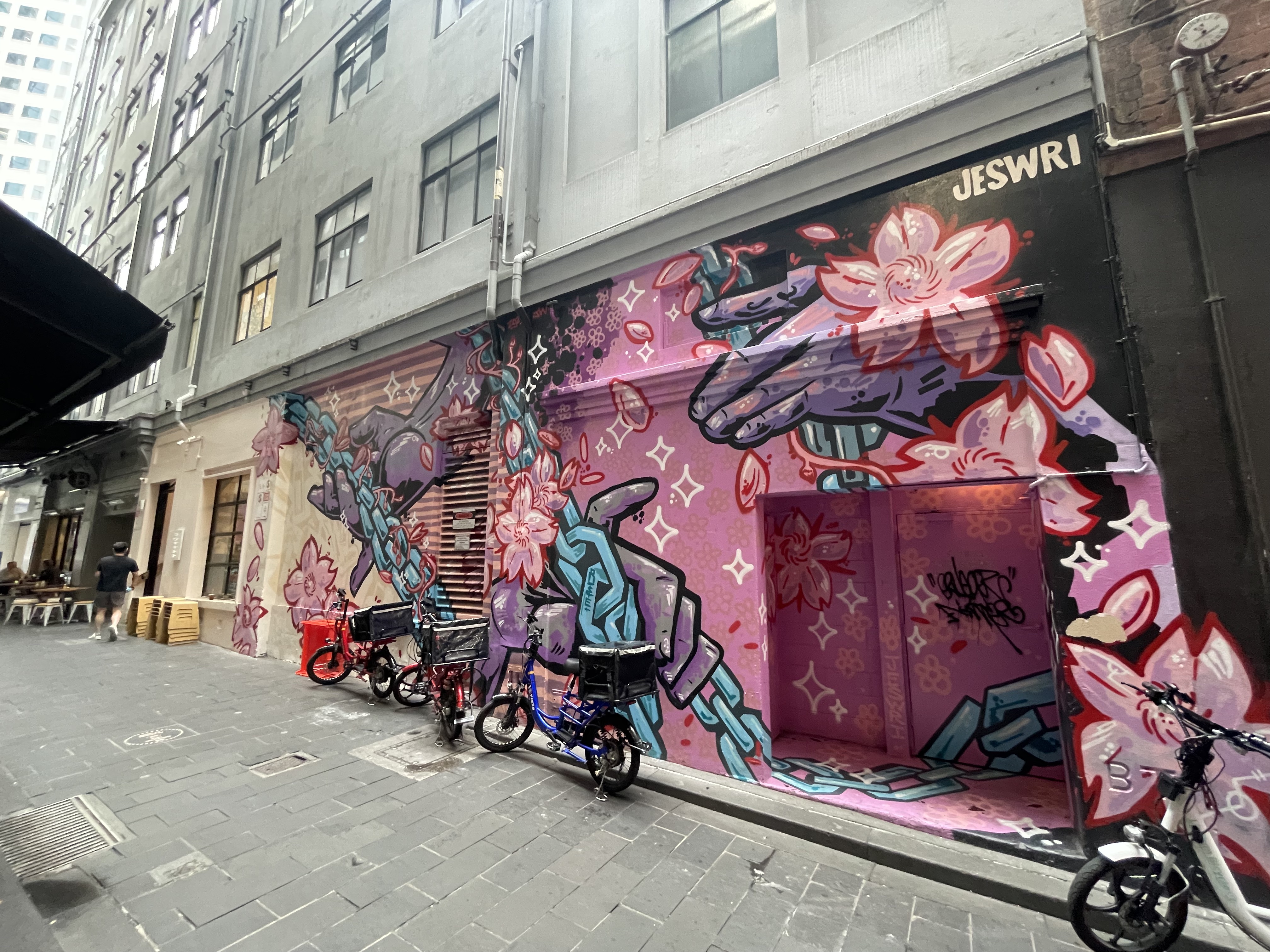
Exploring Melbourne’s lanes on foot is rewarding … but gosh my feet get sore! Amazing mural by Gadigal artist Jeswri (Jesse Wright) in Equitable Place.

It’s been really amazing discovering unknown corners of Melbourne, as well as seeing the history of its arcades: from the long-gone 1853 Queen’s Arcade to the most recent iteration, the Melbourne Walk, a combined arcade and laneway complex, which should open towards the end of 2024.

The book is accompanied by an exhibition at RHSV, Melbourne’s Storied Laneways, curated by David Thompson, which opens 11 April. Further details can be found on the RHSV website.

There’s actually an important story for me with this book, but I’ll reveal that when we launch!


In other exciting news, my latest journal article came out! It was submitted in October 2022, prior to my PhD being finalised, and is actually based on one of the thesis chapters. ‘”One of the Sights of the Colony“: Australia’s Nineteenth-Century Arcades’ appears in History of Retailing and Consumption. This is part of the new special issue on Australian retailing, edited by Matthew Bailey, one of my colleagues at Macquarie University. It is not open access but people can contact me for an author’s digital print of the article if they don’t have university or other library access. The abstract gives you an idea of the focus:

The arcade is a nineteenth-century architectural and social form long associated with industrial modernity and consumer culture. Better known in the British and European urban landscape, they were also significant in the Australian colonial context from 1853 onwards, in numbers rivalling those in the so-called ‘metropole’. Australian entrepreneurs, architects and shop owners utilized what was seen as a very European form to represent the progress and civilization of the Australian colonies and their urban spaces, both in capital cities and smaller regional centres. The arcades, including their presence in the landscape, their architecture, and the commodities and leisure activities found within, were regularly invoked by boosters in order to demonstrate the sophistication of these colonial urban spaces. This article briefly discusses the history of the nineteenth-century Australian arcades, the boosterish discourse that promoted them, and how their representation was a way to express the place of the Australian colonies within a transnational milieu.

It was wonderful participating in this special issue with Matt and other colleagues who work on shopping, retailing and business history. Matt also gave a great overview in the introduction to the special issue of all the authors’ work, which is well worth reading too.

Queen Victoria Markets Building (now, QVB), 1898. Photographer: Charles Kerry. City of Sydney Archives, SRC18023

Another publication also hit the virtual shelves in December 2023, a book chapter also written with colleagues, this time from my other life working on the history and sociology of education. Although it seems somewhat different, for me all these topics tie into aspects of my wider interest in urban history, just from slightly different perspectives. This is, wonderfully, open access and represents just one of the outputs from an ongoing transnational collaboration, Connecting History of Education, involving academics from all over the world and led by a team in Spain.

Julie McLeod, Nicole Davis, Kevin Myers and Helen Proctor, ‘Mapping connections across fields of knowledge and international networks in the history of education: Australasia, Northern Europe and the United Kingdom’ in Andrés Payà Rico, José Luis Hernández Huerta (eds.), Conectando la historia de la educación Tendencias internacionales en la investigación y difusión del conocimiento (Octaedro, 2023). Our chapter

takes up the invitation to map the development of the history of education as a disciplinary field, traced through the activities of discipline associations and journals in two contrasting regions, Australasia and Northern Europe. Defining and putting parameters around these regions is of course a problematic endeavour, replete with longer geopolitical and imperial histories, including the positioning of some regions, such as Australasia, as somewhat peripheral or marginal to developments in northern metropolitan centres. While a full consideration of these matters is beyond the scope of the chapter, we note them at the start in order to signal the larger contexts both framing and unsettling these mapping exercises. There is also considerable heterogeneity within these broadly defined regions. Even so, looking at them side by side has revealed some common concerns and also some important differences in how the journals conceived of their mission in relation to issues of national histories and international outlooks.


More exciting things have been happening too but I’ll just mention one. Last year I was awarded a 2024 Visiting Fellowship with the Harry Gentle Resource Centre at Griffith University, Brisbane.

Harry Gentle was a Griffith University alumnus who studied politics and history in the 1980s at the Griffith School of Humanities. He left a generous bequest upon his death to support the study of Australian colonial history. The Harry Gentle Resource Centre (HGRC) at Griffith University was established to promote the study of the peoples and lands of Australia, with an initial focus on the area that became Queensland and its borderlands in the nineteenth century.

Harry Gentle Resource Centre: Visiting Fellowships

My fellowship is taking my thesis work a bit further, in preparation for writing a monograph on Australia’s arcades.

The project will explore the experiences and networks of nineteenth-century Queensland businesswomen. It examines establishments owned or run by women, and commodities or services they provided, in four arcades built during this period – in Brisbane, Charters Towers and Townsville. Sometimes disguised behind male relatives acting as faces of the businesses or historiography overlooking their participation, these women played a vital role in the Australian colonial economy and represented significant networks in global exchanges of goods, ideas and people.


Earl of Hopetoun, Governor-General of Australia, unfurls the Flag at the opening of the Townsville Municipal Buildings, 16 September 1901. The building’s arcade is under the dome at right of image. Photographer: WJ Laurie. Citylibraries, Townsville. 

I’m excited to be heading up there next week to begin my first couple of weeks of research. It will be great to meet the team at the centre and also catch up with friends and family in Brisbane.

I’ll likely be reporting on the fellowships a bit on my Instagram and Facebook page, so follow me and see what I discover!

Hi everyone. Well, it’s been a crazy busy few months. When is it not?

So much has happened that I want to quickly tell you about.

Well, I had my first holiday in about five years, when I travelled to Ireland, Scotland and England in July. I mostly did lots of hiking, did some pilgrimages to places where my family emigrated from and looked at many many many museums and built and natural heritage sites, which was really inspiring for my thoughts on, practice in and teaching for that space.

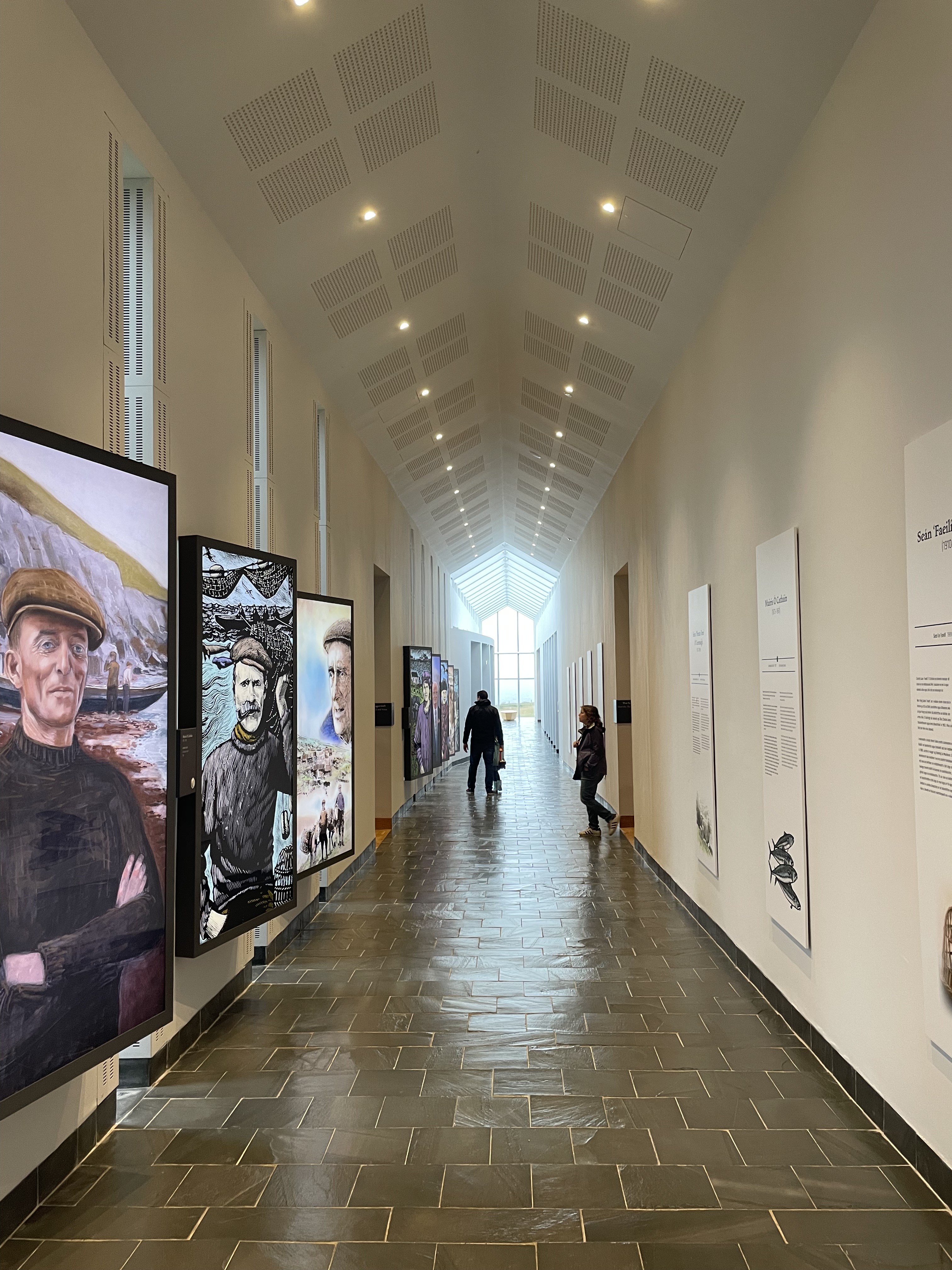
The amazing Great Blasket Centre, a museum in Dingle, Ireland, about the now largely abandoned islands just off the coast. Probably one of my favourite museums ever. So well designed and curated, with stories and objects that really get to your heart, especially if, like me, you have family connections with the region.

I also presented a paper at the fiftieth anniversary conference of the Urban History journal, The State of Urban History: Past, Present, Future, in Leicester. Invited to be part of a panel on Globalising Australian Urban History, I presented some work from my thesis research that didn’t quite make it into the thesis in much detail.

It was fantastic to speak about new work along with other historians of Australian urban landscapes: Simon Sleight, James Lesh, Anna Tenby. Most of us stayed onsite and agreed that it was one of the best conferences we’d been to in a long time. My paper, ‘Arcadian Dreams: Regionalising Australian Urban History’, examined nineteenth-century Australian urbanity through the lens of the arcades, often viewed as a symbol of urban life throughout the globe during this period.

It explored several case studies of these buildings constructed in towns and cities outside the colonial capitals in this era, including their architecture, the shops and other businesses they contained, and the language that surrounded them in print media. I ask in it if, by looking at and comparing these sites across the regional/metropolitan divide, we can gain a better and more nuanced understanding of what it meant to live and be urban in nineteenth-century Australia. 

Inside courtyard of Leicester’s wonderful fourteenth-century Guildhall

After the conference we also got to have a little tour around Leicester on the final day and see their amazing fourteenth-century Guildhall (and the carpark where Richard III’s remains were found, which is a site of pilgrimage itself). After that, I had a well-deserved six weeks off and largely spent my time hiking in the Scottish Highlands, followed by a few days in London, and one little visit to the archives in Bedford to research for a paper I’m giving in October.

The luckiest shot ever. Torridon Estate, a National Trust for Scotland natural heritage site. There is a deer park and museum there but this was in a random carpark I pulled in to so I could take a photo of the mountains. This deer was VERY comfortable with cars and people!
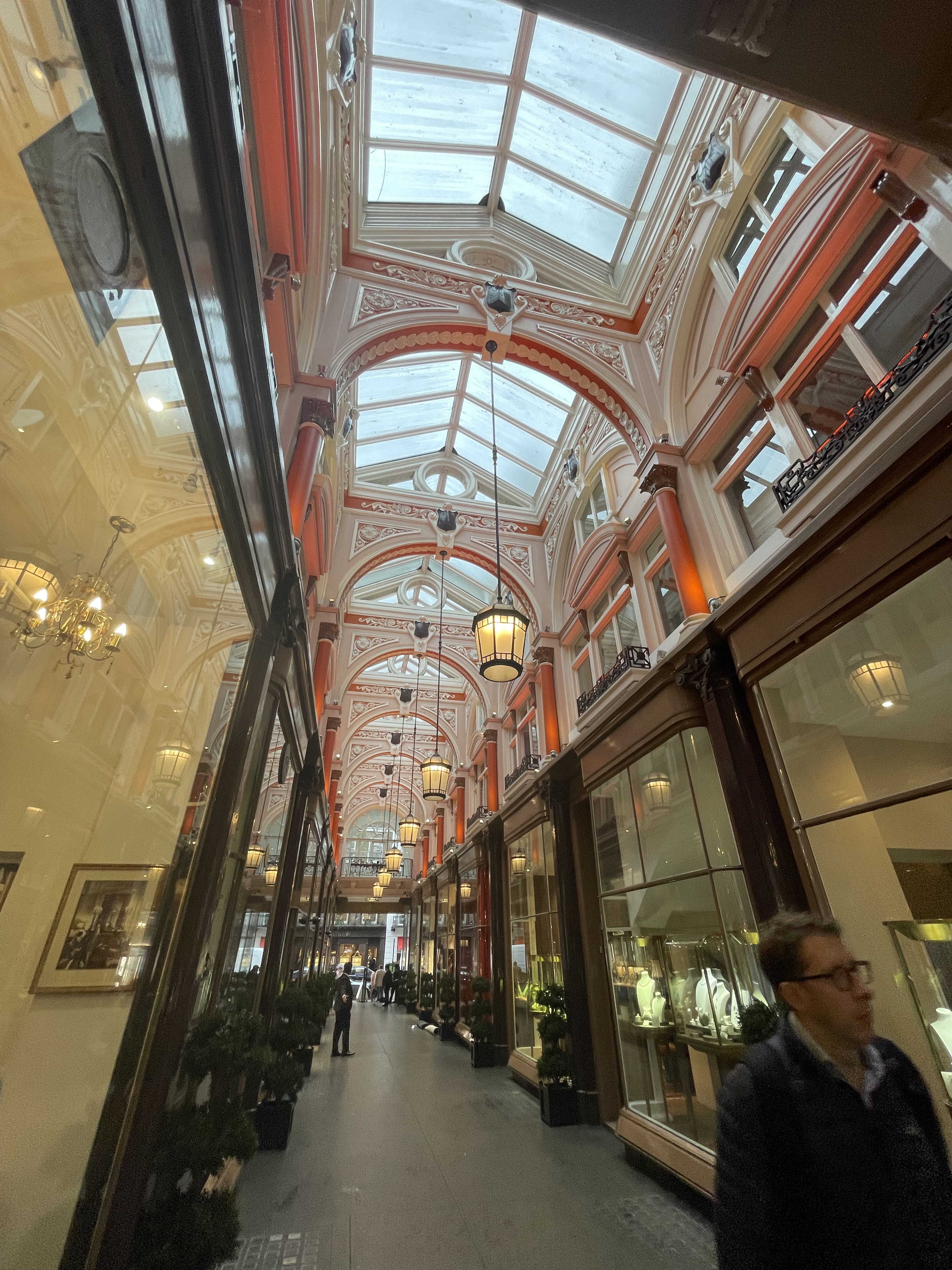
The fabulous 1879 Royal Arcade in London. Less well-known than the nearby and much older Burlington, it’s nevertheless also spectacular and really reminds me of some of the aspects of both the Block and Royal in Melbourne

In August I also presented a longer version of the Leicester paper for the University of Melbourne, School of Historical & Philosophical Studies Brown Bag Seminar Series, and am currently working on it for a journal submission. I also presented a new paper in September, ‘One of the Sights of the Colony: Australian Ninteenth-Century Arcades’, at the European Association for Urban History Online Symposium, Exchanges: European Cities and the Wider Urban World. Based on one of my thesis chapters, this is coming out soon as an article in the History of Retailing and Consumption journal special issue on Australian retail history. It looks at how the arcades were represented in the print media in the nineteenth-century as sites of progress and civilisation in settler colonial Australia.

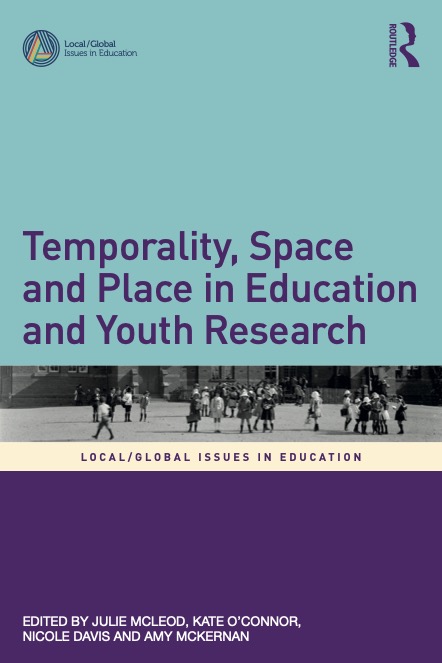
In other exciting news, at the end of June, Temporality, Space and Place in Education and Youth Research, a co-edited collection, produced with Julie McLeod, Kate O’Connor and Amy McKernan, released! A fantastic group of articles from scholars globally, ‘it explores the everyday ways in which time marks the experience of education as well as the concerns and methods of education and youth research’. We are having a launch on 26 October in Melbourne and would love to see you there. Details and bookings can be found on Eventbrite.

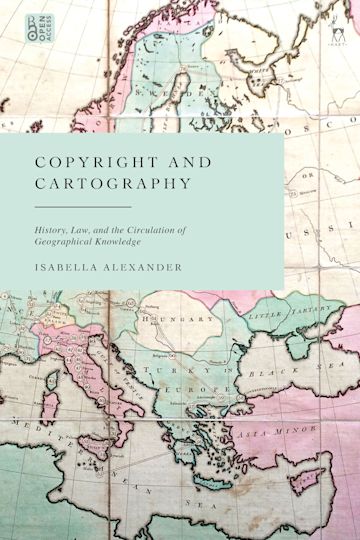
In the same month, a project that for which I was a research assistant, including deciphering the handwriting of some early nineteenth-century clerks in the Ordnance Survey Offices, culminated in a book publication. Isabella Alexander’s Copyright and Cartography: History, Law & the Circulation of Knowledge ‘explores the intertwined histories of mapmaking and copyright law in Britain from the early modern period up to World War 1, focusing chiefly on the 18th and 19th centuries’. I also did the copyedits for this publication and it was such a pleasure to see it come to fruition after being involved with it for several years.

The biggest news though, is probably, GRADUATION! That’s right. All that hard work culminated in a fantastic ceremony at the Royal Exhibition Building in Melbourne, where I got to wear the funny hat and celebrate with friends and family. It was really quite special not only graduating but in a building that is intimately related to the topic of my thesis on the arcades.

On that note, signing off for now! I’ll have some actual history writing on the arcades for you very very soon.


Feature image: Night of the referendum on Federation of Australia, Charters Towers, 1900, with Royal Arcade at far left. Marion Photos. State Library of Queensland, Negative number: 25141